Thursday, 3 November 2016

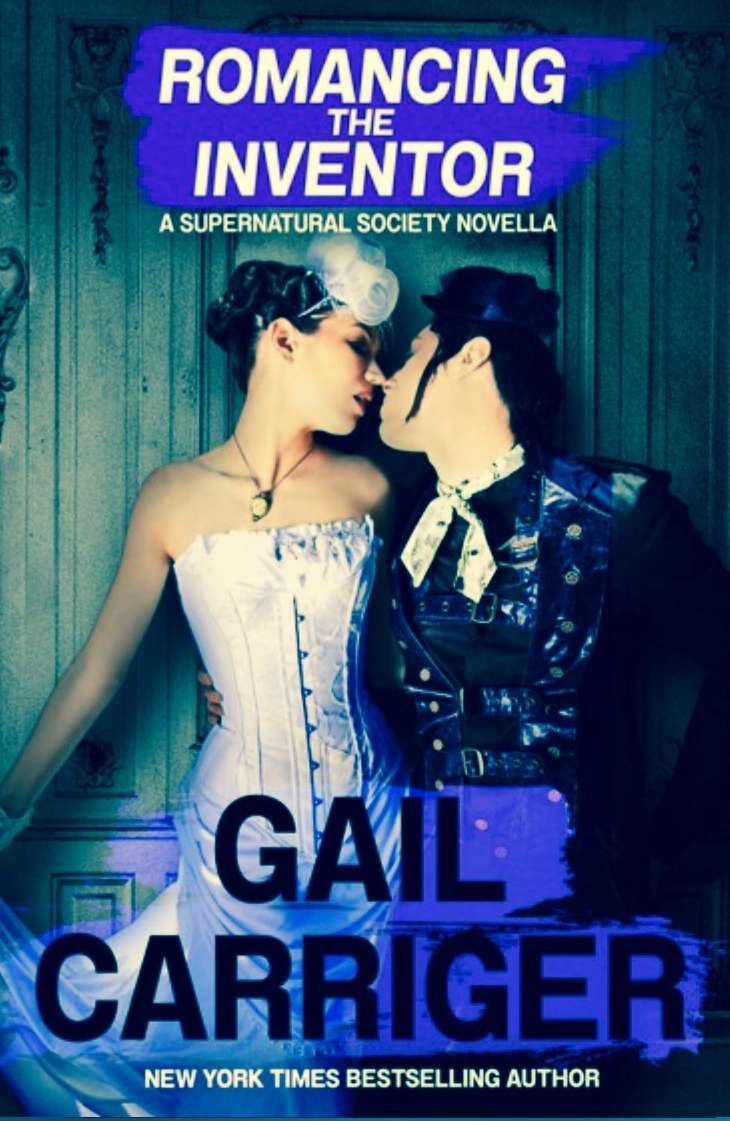
Romancing the Inventor by Gail Carriger

"Eventually, they were both mere puddles of joy"

There just aren't enough puddles of joy these days. This reader was super happy to get that lovely email from the tunes that starts with "i" to say her pre-order was ready for devouring. I am a massive fan of Ms Carriger's steampunk world and am extra delighted at these little morsels that have appeared of late.

It is great to see minor character, Genevieve Le Foux, getting her own little love story and with a dash of Alexia Maccon for good measure (just for those fans like myself). This is heavy on the heaving bosoms kind of romance and it makes for a nice little getaway from reality.

The impossibly beautiful pauper, Imogene Hale escapes her provincial surrounds where all the boys (boys yuck as far as Imogene is concerned) want to marry her. Taking a serving role at the home of a vampire seems the perfect escape with potential for all sorts of non male related wanton-ness for the innocent maid. Who knew love was on the menu?

Mathematics and blood letting might seem strange bed-fellows and yet anything can happen at this hive. Can't wait to see what Gail Carriger delivers next.

5 out of 5 maid's uniforms always get a response.

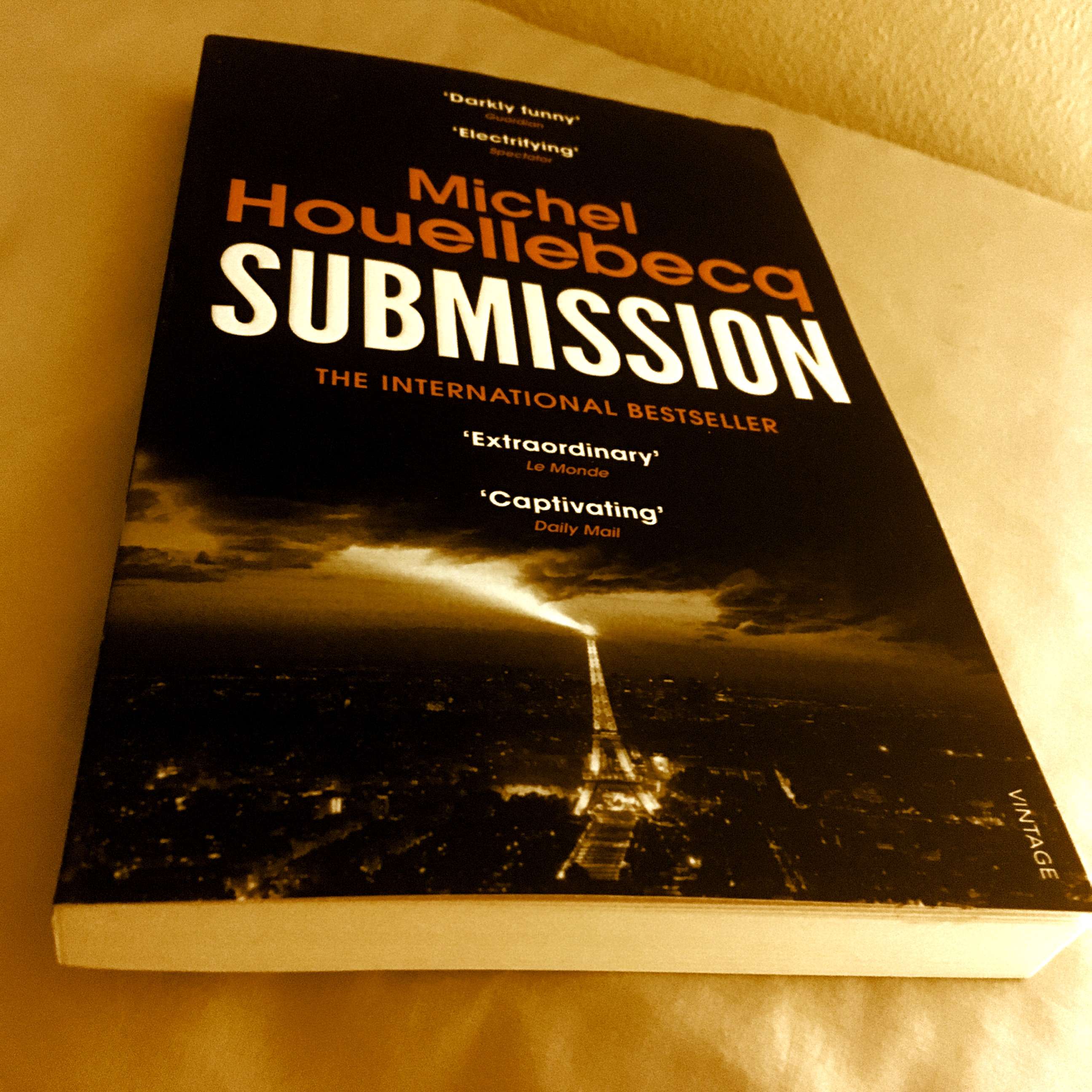
Submission by Michel Houellebecq

"For men, love is nothing more than gratitude for the gift of pleasure, and no one had ever given me more pleasure than Myriam".

I swore to myself I'd never read another Houellebecq. My resolve was tested by all the heat this new novel has attracted. Certainly he can write, he always conjures up some hideous male characters that are quite palpable. One gathers he's probably a little back door obsessed, like his protagonist and a number of basically insecure men who need to assert themselves by constantly testing the barriers to make themselves feel more potent. In any case, I always feel a little grossed out by the detached and loveless couplings within his novels that I've read to date. His character thinks he's in love only when the object is removed, I digress however.

Much of the hype/scandal around this particular novel goes to the topical subject matter. In an atmosphere of fear around the rise of Islam, Houellebecq takes us to a potential near future in France, where Muhammed Ben Abbes of the Muslim Fraternity does to power and the separation of church and state, a hallmark of the French way of life is destroyed. It feels very much like a personal response from a literary elite, questioning how his life would change within these new circumstances, personalised through the eyes of the narrator. So is he being merely darkly humorous when his final take away from this erosion of free will, from exile from his Jewish girlfriend ( supposedly a love interest and yet quickly written off with distance), is that he might have to accept conversion and no longer enjoy the sight of women in shorts, but hey it comes with teenage wives, so it can't be all that bad? Or is that just the final joke?

Clearly I did not enjoy this work and yet I cannot deny its brilliance. It feels like lifting the lid on the middle-aged male, literary snob for whom women are valued only in youth and numbers. Sex is reduced to hum drum sport that seems devoid of anything meaningful, he's depressed, lost and sad. Just as our "hero" can't perform with the first prostitute he encounters, when there's more than one its fine, and he seems to take great pains in telling the reader about the size of his tip (the money, I mean, out of the gutter people). The protagonist's ability to merge with his surroundings is similarly ineffectual to begin with and he runs off to the country-side without enough petrol, before heading back to reality and eventually finding his rhythm there. The fact that I recall all these details (unusual for me) is due to a mix of disdain at the subject and wonder at its execution. The evocation particularly of a messed up political situation, violence ,confusion and then a strange shift into a new status-quo is particularly well done.

For someone like me, that craves equality for all, I feel Houellebecq's characters tend to personify the kind of creeps that constantly seek to keep women down because they feel threatened by them. Reducing women to footnotes, replaceable after a certain age when their minds have matured to fully comprehend their powers. This is my personal interpretation and I'm still optimistic that not all men are of that ilk.

4 out of 5 uncomfortable reads are a challenge of their own and help us better understand the world.
Monday, 31 October 2016

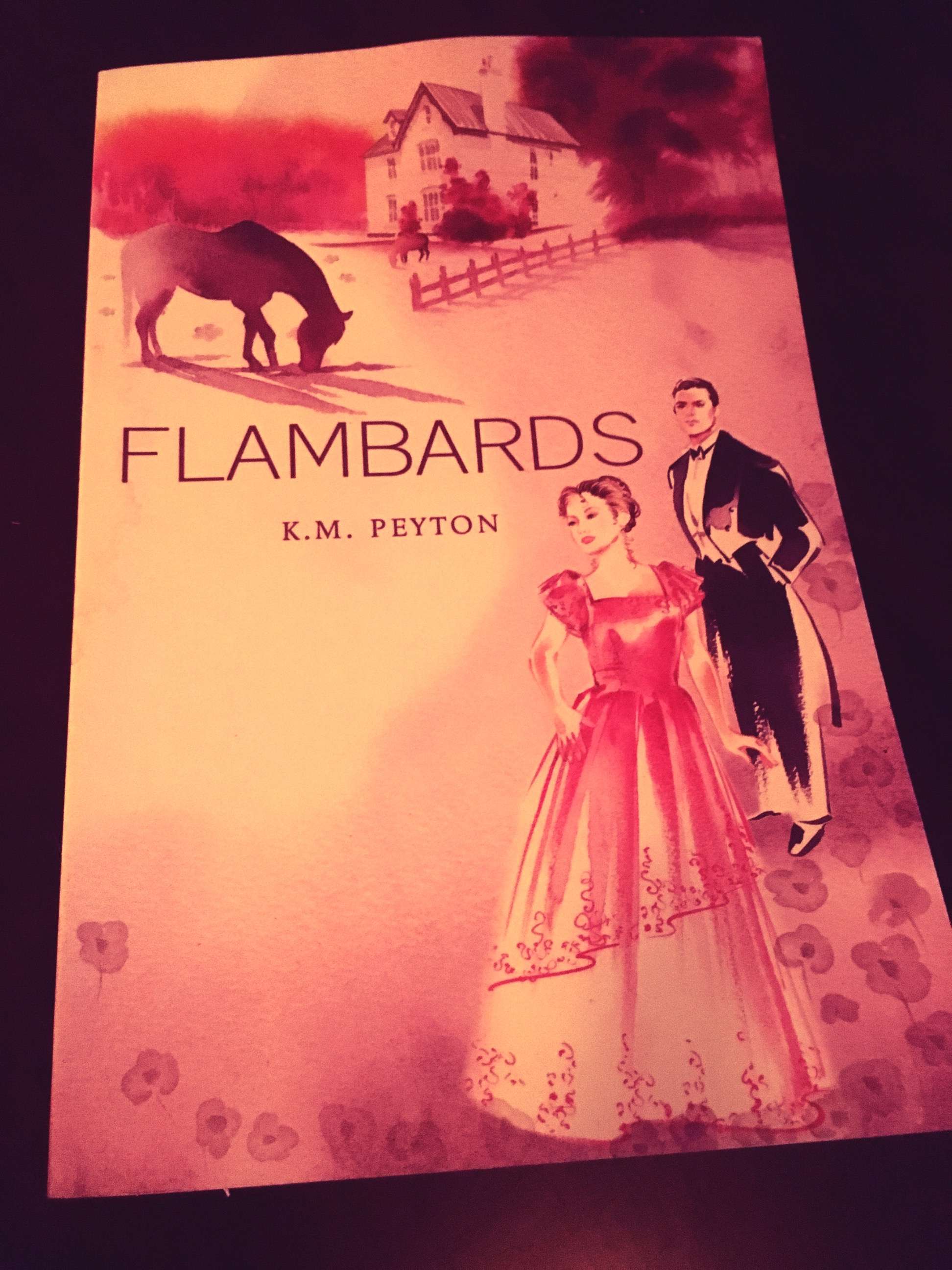
Flambards by K.M. Peyton


"Christina wondered why, when she was an heiress, she had to be so utterly penniless for all the years before twenty-one".

It appeals to my juvenile sense of humour that Christina really likes Dick. I shall stop behaving like a naughty school boy and return to the subject at hand. Christina is an orphan who is due to come into a considerable inheritance upon her maturity, however, her childhood sees her passed from relative to relative. The novel begins with the latest move to her Uncle's estate, where if you're not into riding and hunting, well you're basically nothing. Christina has to learn to ride and to pick sides amongst her relatives. Uncle Russell is a frustrated hunter, unable to ride anymore after an accident. His two sons Mark and Will are polar opposites and then there's the delightful Dick, who helpfully teaches Christina how to ride.

This novel was on 2 of my to read lists - the 1001 children books to read before you die (its always before you die- let's hope that is a long way off, if only to get through all the lists) and also Julia Golding's top 10 characters from children's historical fiction  - what can I say, I love ticking off a list.
Being a children's book, I was somewhat surprised by some of the subject matters covered and yet they were covered in a sensitive way and with the perspective of a child, who is shocked to find out some home truths.What is so disturbing, to me at least, is how timeless Christina's struggle to live her own life and take control of her circumstances in her male dominated world rings true today. The book is set in 1908 and in many ways could be occurring today. When Christina is forced to cook and clean because there are no servants available it reminded me of my workplace's kitchen area- alas that is another pet peeve.

While the cover suggests this is some kind of Black Beauty style horsey novel, this is really a beautiful story about a strong female character that dances to the beat of her own drum, admittedly with the benefit of a big inheritance coming her way. There's tension, there's drama and for those disinclined there is also fox hunting ( although its gruesome reality is hinted at) and basically it makes for a great read, which was possibly the most surprising thing for me.


5 out of 5 - I now want to read the other titles in the series - drat!.


Sunday, 30 October 2016

after the quake by Haruki Murakami

"I don't like refrigerators"

What a rubbish day today was, as frustrating and strange as a Murakami story - although to be honest I much preferred the novel. After the Quake  is a strange mass of thematically linked short stories that mix reality with the surreal. A little like dating an over grown Peter Pan who vacillates between attentive and dismissive, the collection will draw you in and, like so much of his work, leave you in a small puddle of confusion. That's not to say that this isn't great. I'm a huge fan of his work, possibly because I'm slightly masochistic ( see commentary about dating Peter Pan) but also because his stories are so very different and dream (and sometimes nightmare) like. He seems to mix the hyper real with its opposite and this is no exception. While the Guardian's reviewer saw the stories as reasons for optimism , my interpretation was perhaps a little darker.

There is a continual trope of emptiness, personified in the wife's farewell note in UFO in Kushiro, "living with you is like living with a chunk of air". Reminiscent of someone who continually draws you in then casts you aside because they are devoid of any sense of inner purpose, a ghost that merely performs the function of being there.
Bears and Frogs accompany the earthquake motif and the characters share a sense of distance and remove, even when they are in close proximity. 
Only Murakami could do so much in just 132 pages and it certainly bears re-reading.

5 out of 5 times the earth doesn't always shake.

Saturday, 29 October 2016

The Pigeon Tunnel: Stories from My Life by John le Carré


"How much our poor beleaguered spies must be wishing that Edward Snowden had done the novel instead."

I have been a fan of espionage charged fiction since I was in primary school. I moved swiftly from James Bond to Jason Bourne with a few other detours in between and yet as I got older I moved into the slightly darker territory of John le CarrĂ©. The nom de plume sounding ever so important and rather more intriguing that his real name of  David Cornwall.

 When I saw that he was publishing a memoir, I immediately got on to Book Depository and ordered myself a copy, being naturally interested to see where fiction and reality intersected.
On the one hand the book brings a unique perspective to some historical events and characters, on the other the author still stands firmly behind the classified nature of some of his life and continually reminds the reader of his obligations to retain secrecy. What we get here are snippets and fortunately those snippets or anecdotes are sure to get your attention, with varying levels of success. The personal certainly brings greater resonance, for instance when the author describes real people and instances that have inspired tragic characters within his novels.

There's a sense of cathartic therapy in the author's depiction of his rather dodgy father. Throw in a lunch with Rupert Murdoch, and a number of encounters with a rogues's gallery of literary fans and you might get some sense of what you might be in for here.


4 out of 5 


Saturday, 22 October 2016

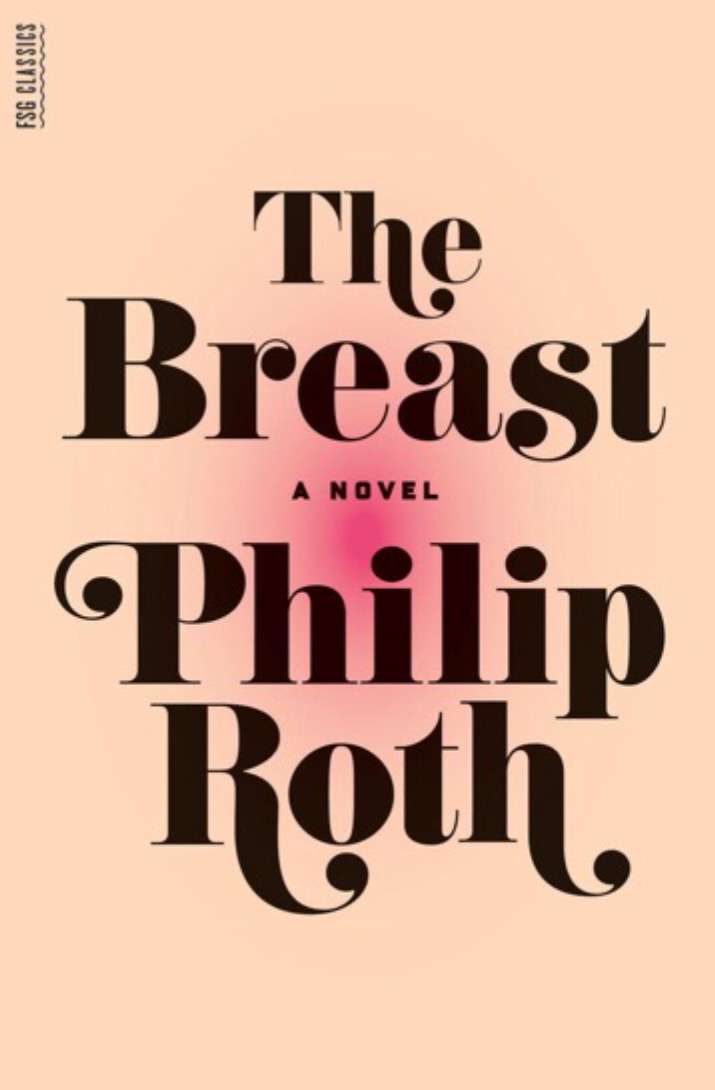
The Breast by Philip Roth

" I actually had  turned into a breast"


The jury that rests in my mind is somewhat out on this one. It is in part very reminiscent, and alludes specifically to both Kafka and Gogol. This tale of a man who turns into a disembodied breast. He rather enjoys the ministrations of  his nurse while  devoutly wishing for some penetrative interface with his lover, Claire. Whether he happens to be  a strange free floating breast or a man, Claire never seems quite capable of meeting his desires and he seems equally incapable of communicating them with her - sounds like a rock solid coupling that one.

While I feel only a man, and definitely a breast man, could have penned this short novella, it is nonetheless intriguing and quite telling that David Keppesh's first impulse is to redefine his masculinity in a slightly phallic fashion. Much of the story is about his thwarted attempts to reach completion by any means necessary - like so many phantom tinder males. That doesn't make the story less enthralling, the sense of futility is one of its high notes. A rather quick read, this was an entertaining and speedy way to check another book off the 1001 list.

4 out of 5 - don't stop now nurse.

Speaking Out: A 21st-Century Handbook for Women and Girls by Tara Moss

"Whatever helps you through the day, know that you deserve to take those minutes for yourself"

It would be so easy to be insanely jealous of the amazingly talented, Tara Moss and to be so, would do a huge disservice to this amazing woman. I would urge every woman to read this book which has so many aspects that many of us can relate to. Making up 50% of the planet, we really deserve the chance to be heard and have our many points of view considered. It might help if men read it too, just to get an idea of the state of play.

Moss merges practical advice with some depressing data to demonstrate many of the issues we face everyday and which often cause us to think "is this just my experience?". As someone who was raised to expect equality, while often being treated differently by my father particularly, (aren't we all a mass of contradictions, no surprise our parents are) speaking out and being taken seriously has been a bit of a crusade my whole life. I've constantly sought out roles in typically 'male' areas to prove that gender has no part in one's ability to deliver. This has not been a constantly positive experience and in fact I've experienced many of the quite scary ways that a voice can be challenged. Sadly, the entire chapter on Diversionary Tactics was eerily familiar and I find that abhorrent.

Thank you to Tara Moss for clearly identifying what is going on here and supporting others to find their voice, a truely admirable thing. I remember reading Tara Moss' first novel Fetish, many years ago and being shocked by its violence which seemed completely at odds with the image of a fresh faced model and yet that is such a superficial notion. Aren't we all more than our appearances and can't they often be completely deceiving or at least hint at only one part of a rounded personality? That is a lesson we all (myself included) need to learn in a world controlled by media sound bytes.

I remember the day when my sense of hope died somewhat; when I realised I wasn't invincible and that a man could physically overpower me and leave me psychologically and possibly physically scared. If I were to ever have children, it would be my fervent desire that they never had to experience that kind of rude awakening. I wish that they could make mistakes without the disapproving eyes of trolls (the worst kind of hypocrites), that they could be the best version of themselves - a fully realised intelligent human, accepting of themselves and others and always brave enough to challenge the status quo through investigation, discussion and action.

It is perhaps a mark of a really great work that the reader is left to think and relate the content to their personal experience. As you can see, Speaking Out struck a chord with me and I'd certainly recommend it to my friends and anyone who might trip over and discover my little blog.

5 out of 5 reassuring words to keep fighting on.